
Long-Lasting ADHD Symptom Controla,b in a Lisdexamfetamine Dimesylate Oral Liquid
aADHD symptom control lasted up to 13 hours in an analog classroom study of pediatric patients treated with lisdexamfetamine dimesylate.
bBased on bioequivalence studies with lisdexamfetamine dimesylate in healthy patients. Arynta™ has not been tested in clinical trials.





An Oral Liquid Solution to Get Them Started Until They’re Ready to Graduate to Tablets or Capsules

Arynta™ (lisdexamfetamine dimesylate) is a ready-to-use oral liquid that contains the same active ingredient as Vyvanse®. In clinical trials, lisdexamfetamine dimesylate provided up to 13 hours of ADHD symptom control with a single dose.b

No capsules or sprinkling needed
- Some children have a hard time swallowing or cannot swallow capsules or tablets
- Children who are sensitive to certain food textures may have difficulty taking medication sprinkled or mixed into their food
- Arynta™ provides another option for children 6 years of age and older who need or prefer a liquid

Flexible dosing
Your child's doctor can adjust the dosage to meet your child's needs.

A ready-to-use liquid
Arynta™ oral liquid comes ready to use and can be stored at room temperature, no refrigeration required.
Store at 20°C to 25°C (68°F to 77°F); excursions permitted to 15°C to 30°C (59°F to 86°F).

Sweet tasting and dye free
Arynta™ May Help Your Child With ADHD Stay Focused and Attentive Throughout the Day
The studies described below were conducted with oral capsule doses of lisdexamfetamine dimesylate. Arynta™ is a liquid form of lisdexamfetamine dimesylate. Arynta™ has not been tested in clinical trials.
Lisdexamfetamine Dimesylate Effectiveness Is Supported by Parent Ratings
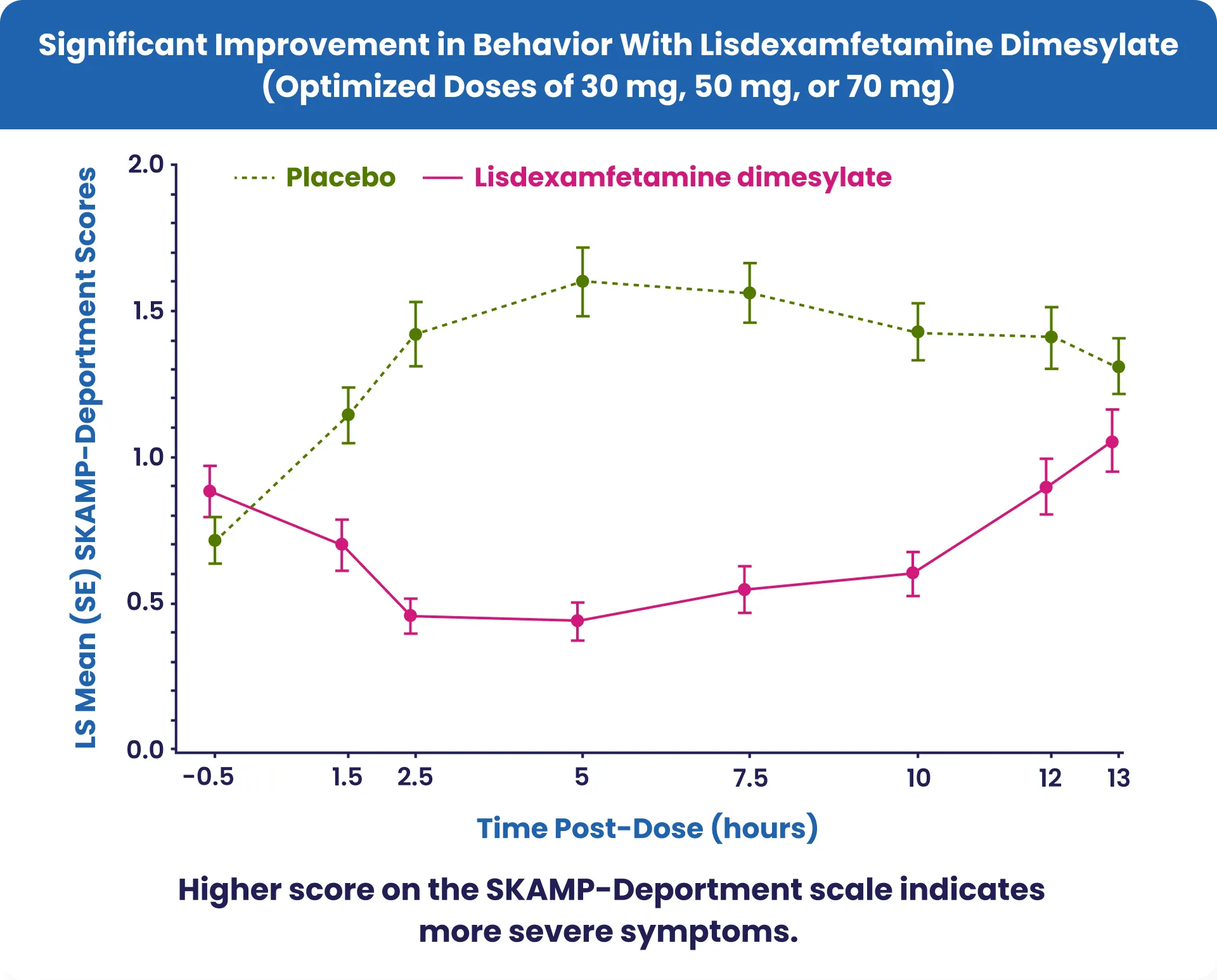
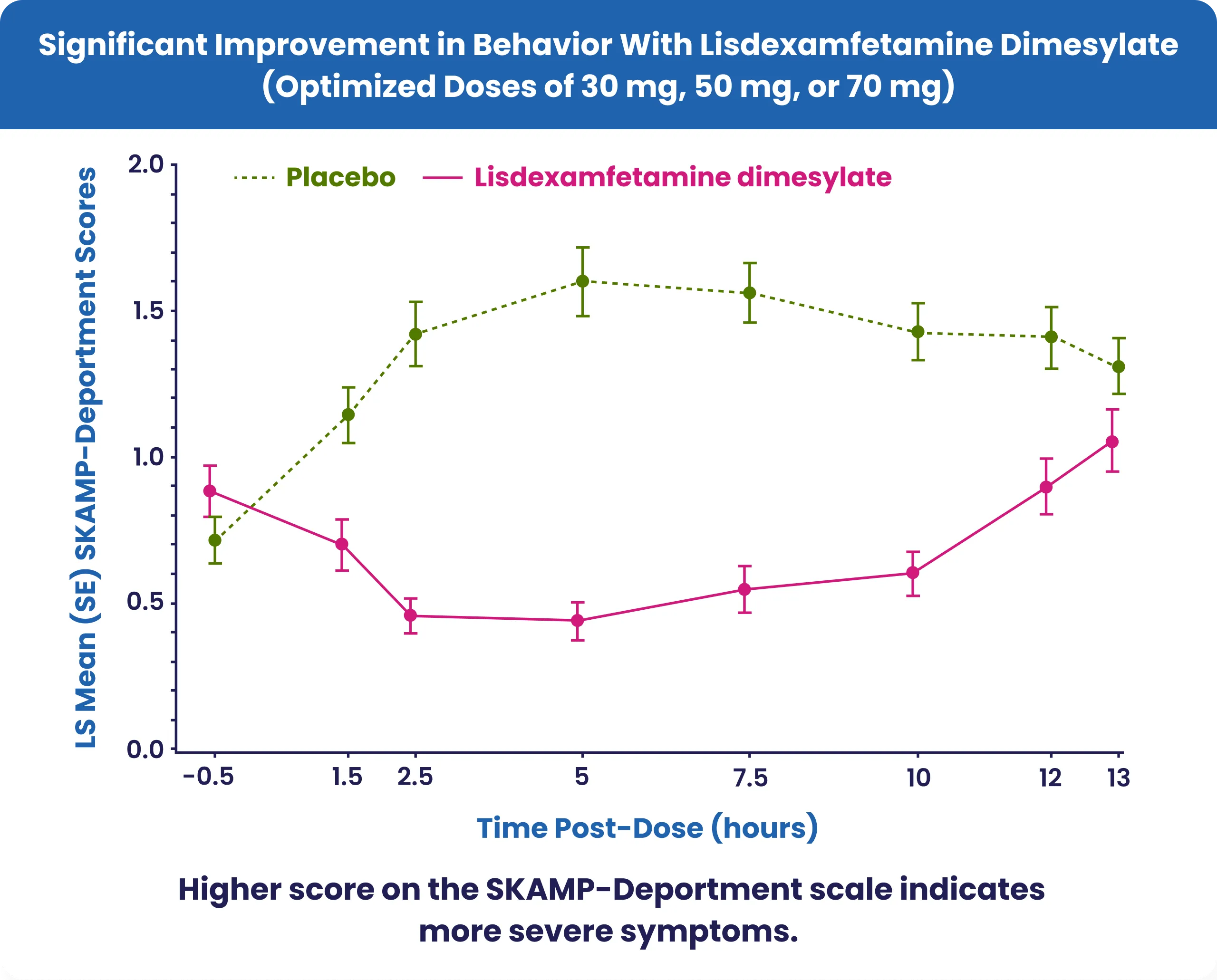
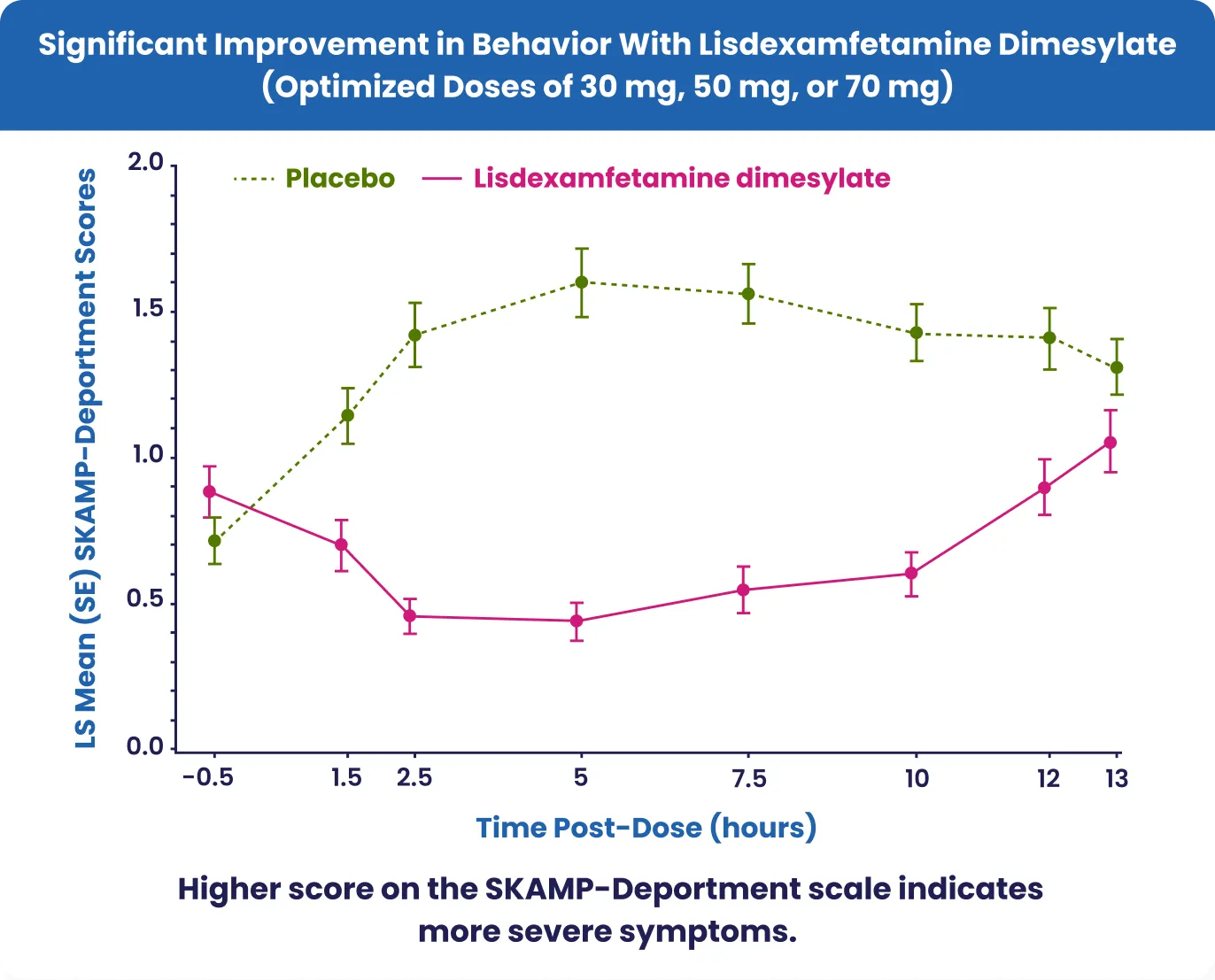
In a clinical trial, the benefits of lisdexamfetamine dimesylate lasted throughout the morning, afternoon, and early evening, as scored by parents.
Up to 13 Hours of ADHD Symptom Control With Lisdexamfetamine Dimesylate
About the Study
An analog classroom study was done to test the effectiveness of lisdexamfetamine dimesylate in children with ADHD. The study included 129 children with ADHD, ages 6 to 12 years. Doctors found the best dose of lisdexamfetamine dimesylate for each child (30 mg, 50 mg, or 70 mg). About half received their best dose daily for 1 week, followed by a placebo (sometimes called a “sugar pill”) daily for 1 week. The other half received the sugar pill the first week followed by lisdexamfetamine dimesylate the second week. On average, children showed a significant improvement in behavior when taking lisdexamfetamine dimesylate compared with placebo.
The SKAMP-Deportment scale is a scale used by teachers to rate the behavior of children with ADHD during classroom activities.
Lisdexamfetamine Dimesylate Safety Was Studied in Pediatric Patients in 2 Clinical Trials
Study 1 looked at reports of side effects in 218 children aged 6 to 12 with ADHD taking lisdexamfetamine dimesylate compared with 72 children taking placebo. Side effects that were reported in 2% or more of children taking lisdexamfetamine dimesylate and at least twice as often compared to children taking placebo were decreased appetite (39%), insomnia (22%), upper abdominal pain (12%), irritability (10%), vomiting (9%), weight decreased (9%), nausea (6%), dry mouth (5%), dizziness (5%), affect lability (3%), rash (3%), pyrexia (2%), somnolence (2%), tic (2%), and anorexia (2%).
Study 4 looked at reports of side effects in 233 children aged 13 to 17 with ADHD taking lisdexamfetamine dimesylate compared with 77 children taking placebo. Side effects that were reported in 2% or more of children taking lisdexamfetamine dimesylate and at least twice as often compared to children taking placebo were decreased appetite (34%), insomnia (13%), weight decreased (9%), dry mouth (4%), palpitations (2%), anorexia (2%), and tremor (2%).